Genkai Japanese Restaurant
Genkai has served Chico, California since 1986. We rebuilt its website around the question guests ask on their phones, what's on the menu and are they open, and have kept improving it since, from a fuller homepage in the owners' own words to faster loading and honest opening hours.
Introduction
Genkai Japanese Restaurant & Sushi Bar has been serving Chico, California since 1986. Its old website made a simple question hard to answer on a phone: what is on the menu, and are they open? We rebuilt it at chicogenkai.com around that question, and have kept improving it since, as the owners reviewed it and as we saw how people use it.
Background
The previous site was a stock WordPress theme with a slider and a shop plugin the restaurant never used. Its menu page loaded 42 script and style files, and on a phone the header alone filled the screen: a full-screen cookie notice first, then a column of one-per-row category buttons before the first dish. Someone standing outside deciding where to eat had to scroll past all of it.
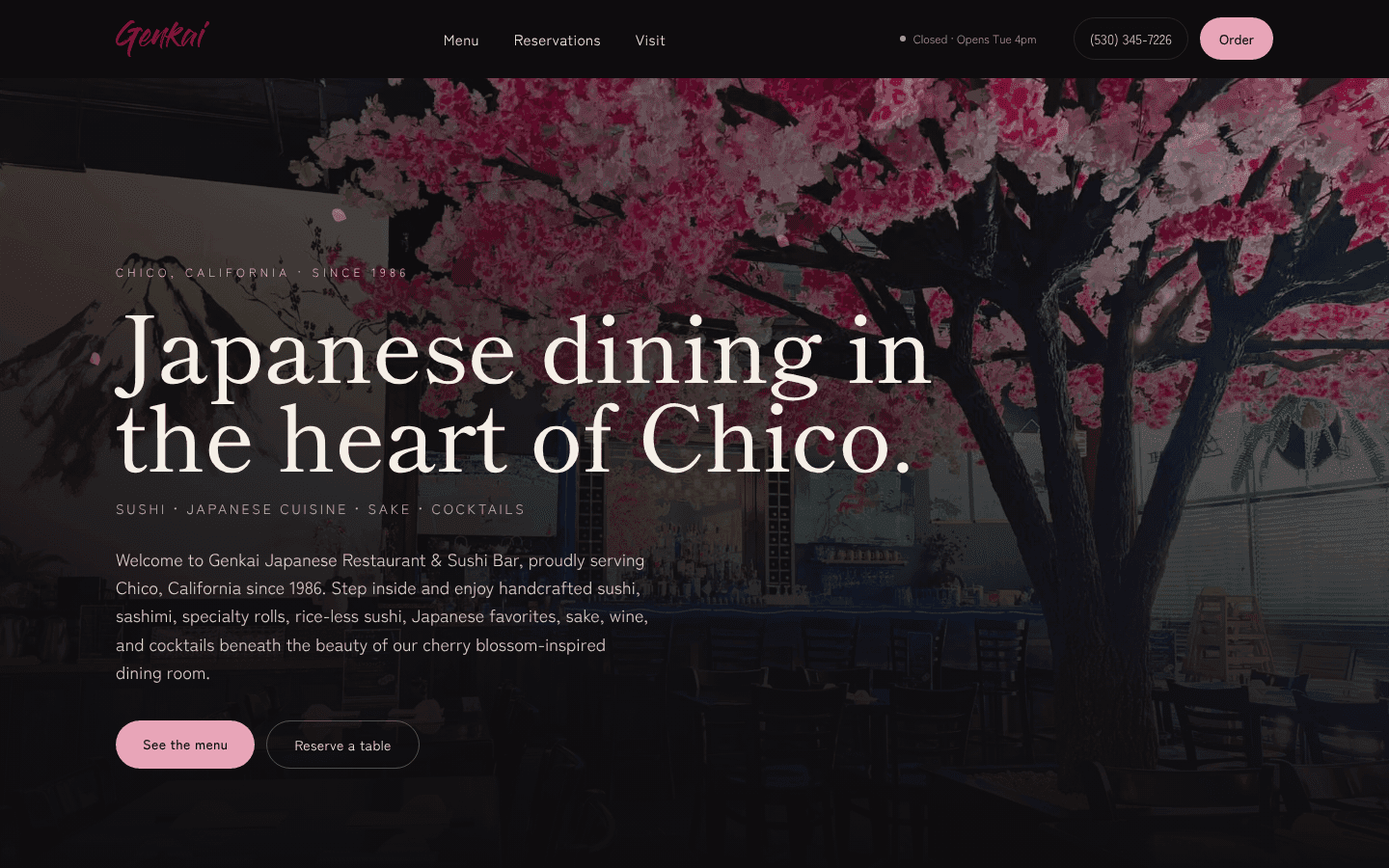
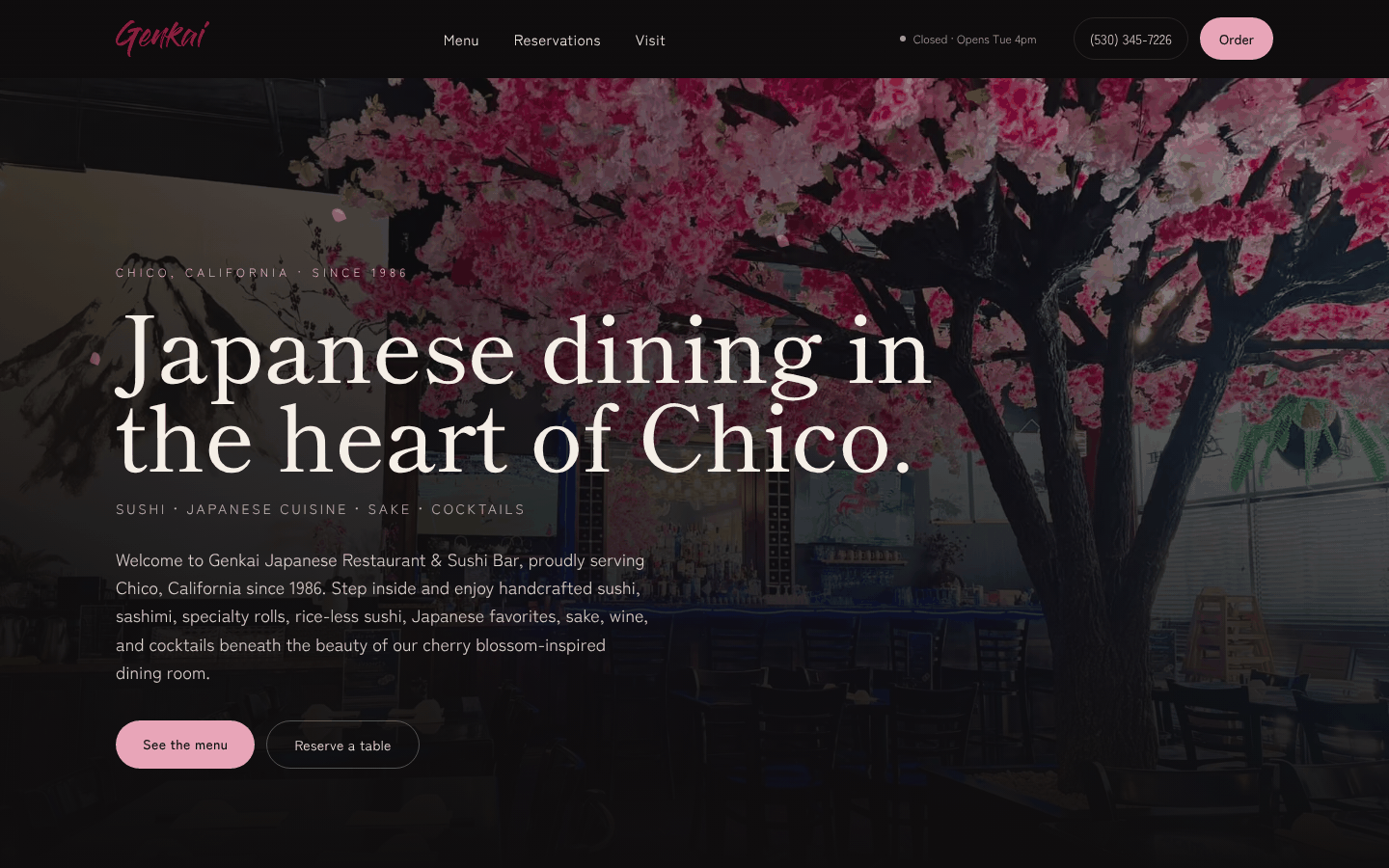
The rebuild started from the room instead of a template. A full-size cherry blossom tree stands in Genkai's dining room beside a hand-painted mural of Mount Fuji, over black lacquer tables, so the site takes its colors from that room: near-black, warm paper white, blossom pink and a little antique gold. The goal was that someone who has eaten there recognizes the place on the screen.
A menu people can actually use
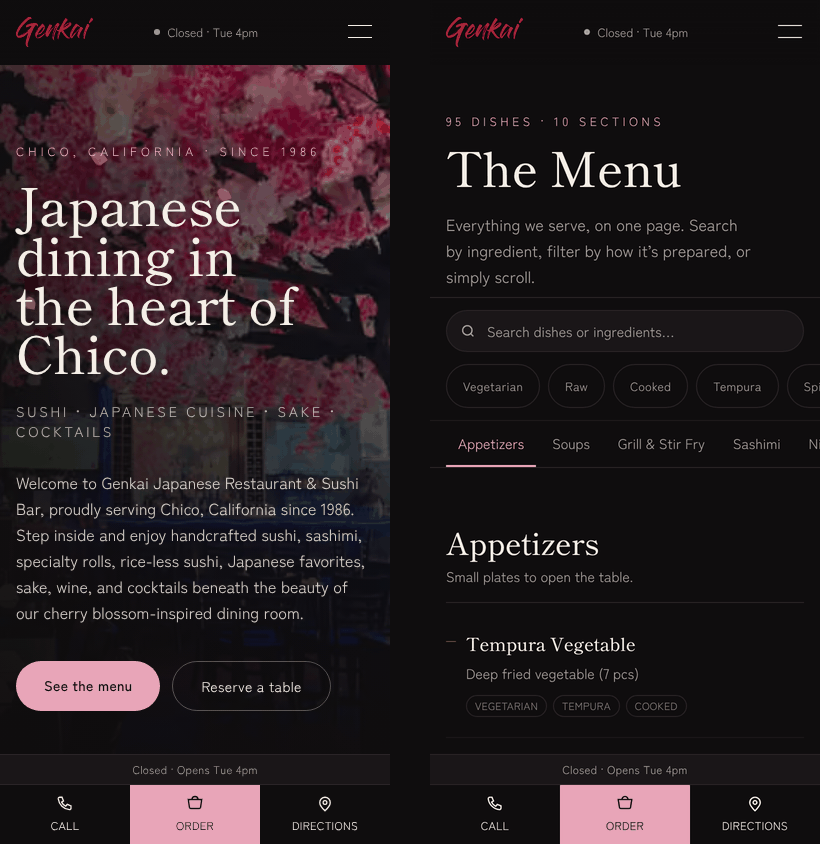
All 95 dishes sit on one page in one continuous scroll, with a search box that finds dishes by name or ingredient, filters for vegetarian, raw, cooked, tempura and spicy, and a category bar that follows you down the page. Dishes are set as plain typographic rows instead of photo cards, closer to how a printed menu reads and quicker to scan. On a phone, Call, Order and Directions stay pinned to the bottom of the screen, because those are the three things a hungry visitor does next.
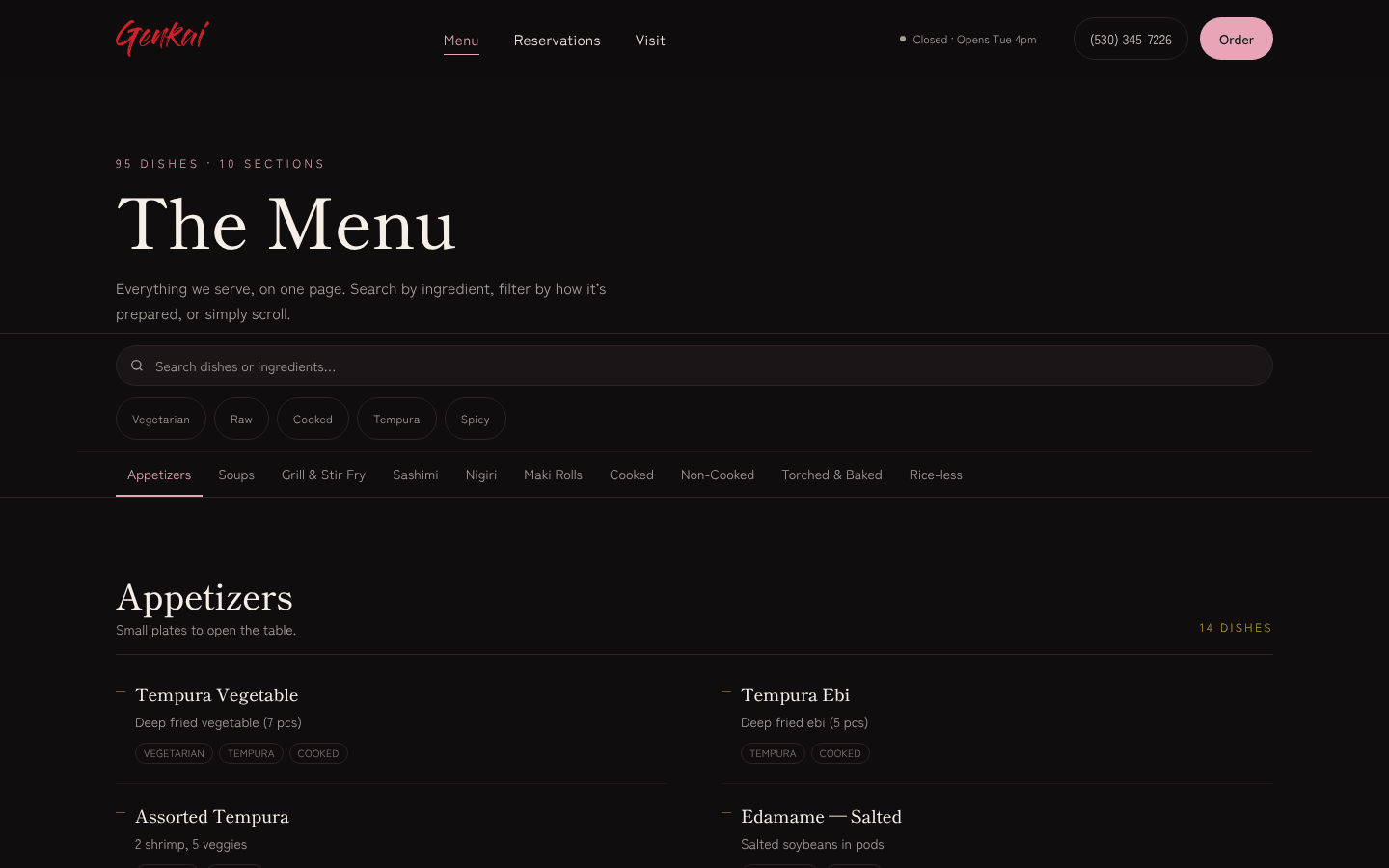
Prices are deliberately not shown. The site is for browsing and visiting, not a storefront, and a price on the page is a number the owners would have to keep correct everywhere it appears. Leaving prices off means the site can never be wrong about one.
What we changed since launch, and why
The homepage now says what the owners wanted said
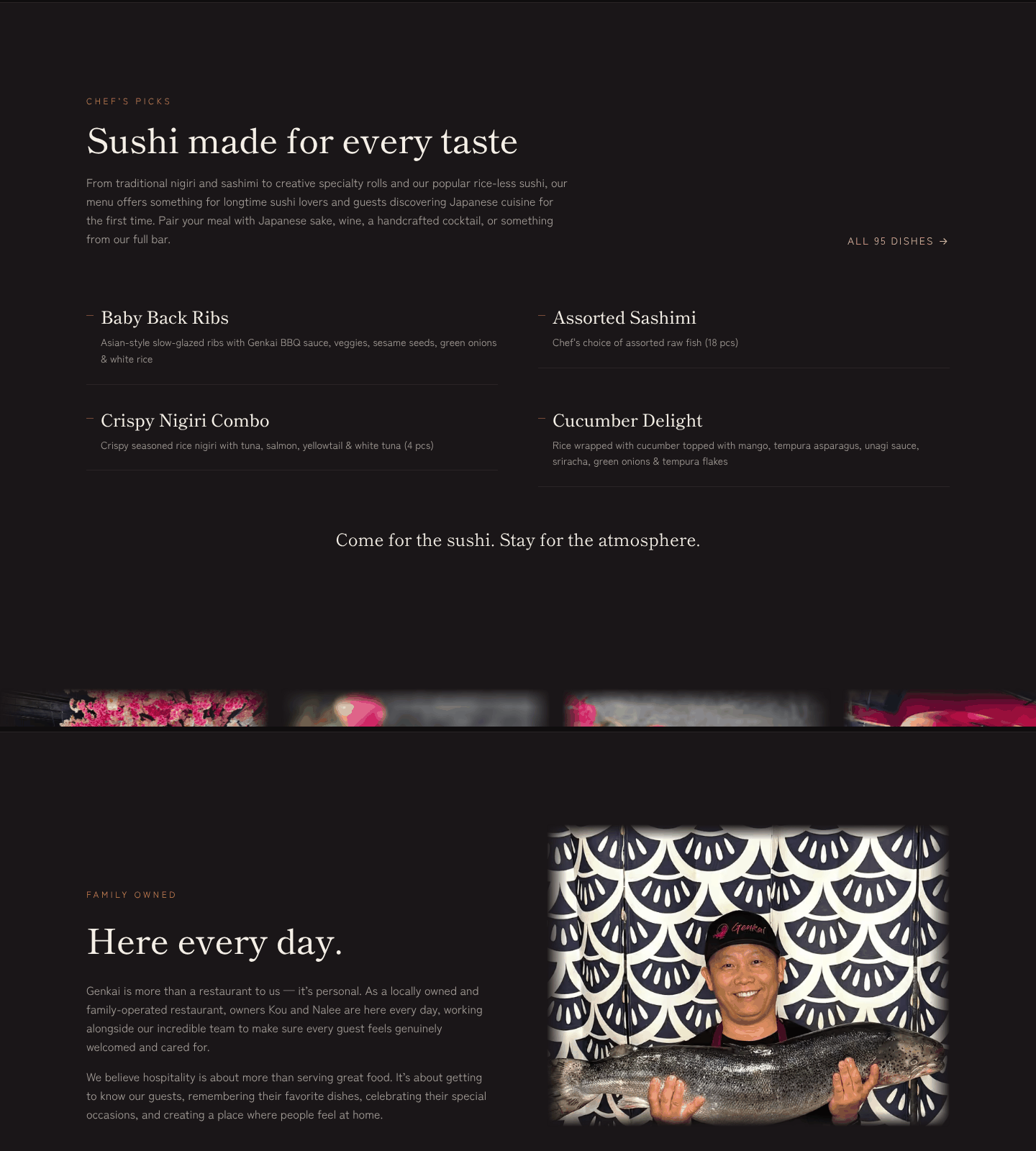
The first homepage was a hero and a few links. The owners sent their own copy, so we gave it room: a section on sushi for every taste with a few of the dishes guests ask about, an atmosphere section, a short family-owned section about Kou and Nalee being in the restaurant every day, and a "Chico tradition since 1986" section. A photo gallery strip of the real dining room and food runs between them. The reason is plain: the strongest things Genkai has are the room, the family and 40 years in the same town, and a homepage that only listed links left all three out. We also reworked the chef's photo crop so his face and the whole fish stay in frame, and set the welcome line like a pull quote so it reads as designed rather than as stray text.
The story is the restaurant, not a biography
An early draft of the About page told a founder story. The owners read it and asked us to take the previous owner and the personal history out completely, which we did. It now covers the restaurant, the food, the room and the team, in their words, and anything we could not confirm with them, such as roll counts or how many guests they serve a day, came out rather than staying in as a guess.
Faster on a phone
On a simulated mid-range phone the first big image took 4.6 seconds to appear, which is too long for someone deciding where to eat. The page was loading its main photo late and waiting on a stylesheet before drawing anything. We told the browser to fetch the main photo first and stopped the styles from holding up the first paint. The site scores 91 to 96 for mobile performance, with perfect scores for accessibility, best practices and SEO, and the page no longer jumps around while it loads.
Fixing what only keyboard users could see
The site draws a clear ring around whatever you have selected with the keyboard. Three form fields, including the menu search, quietly turned it off, which looked fine with a mouse and left keyboard users with no sign of where they were. We restored it, and kept a note beside the rule so it does not return.
A safer site, without breaking it
We added protections that stop other sites from embedding Genkai's pages, force secure connections, and block scripts from places they should not come from. We left one stricter protection out on purpose: switching it on would have turned the pages from instant static ones into ones built on every visit, slower for a restaurant menu with nothing to steal. We checked each change against the live pages, including the Google map on the contact page, before releasing it.
Knowing whether anyone uses it
The owners wanted to know whether anyone opens the menu. We added visitor counts that do not slow the page or put a cookie banner back, which was the thing the rebuild had just removed. We also record which Order button people tap (the bottom bar, the header, the footer or the homepage) and which delivery option they choose, so the owners can see whether the bottom bar earns its space. Preview versions of the site never count toward the real numbers.
No links to orders nobody will cook
When the restaurant left Uber Eats we removed every mention of it: the link, the order option and the answers on the contact page. A live link to a platform the kitchen no longer fulfils through does not look broken. It takes an order nobody cooks, and the guest finds out when the food never arrives. Delivery now goes through DoorDash only.
Honest hours
The site shows whether Genkai is open right now. It used to keep saying "Open until 8:30pm" after the last table had been seated, so the status now reflects last seating, and the Call button says so when a call would not reach anyone. Opening hours are also checked against the restaurant's Google listing, so the site and Google do not disagree. Happy hour, Tuesday to Saturday from 4pm, now has its own line.
Easier for the owners to run
The owners edit the menu themselves in a simple editor, and add a photo to any dish if they want one, without calling us. When a fix we made to the editor broke it, we took the convenience out rather than keep patching it, because editing the menu is the editor's only job. Reservation requests are limited and de-duplicated so a double tap does not send two, and the settings page warns the owners if requests cannot reach them.
Where to see it
Genkai is live at chicogenkai.com. Open it on a phone and try the menu search.