Oppa House
Oppa House is an all-you-can-eat Korean BBQ and hot pot restaurant in Broken Arrow, Oklahoma, with private karaoke rooms, a stage room, and a love-lock wall. Its new website replaces a Wix site search engines couldn't read with a neon, Seoul-street design where every dish, room, and event is real, readable text, built to turn late-night energy into bookings.
Introduction
Oppa House is an all-you-can-eat Korean BBQ and hot pot restaurant in Broken Arrow, Oklahoma, with private karaoke rooms, a stage room for parties of up to 40, a full bar, and a wall of padlocks that guests can hang from. Its website had to do something most restaurant sites don't: make a loud, late-night, celebratory room feel as good on a phone screen as it does in person, and turn that feeling into table bookings, karaoke reservations, and event enquiries.
Background
Oppa House opened in Broken Arrow with a lot more going on than a typical restaurant: grill-and-hot-pot tables, four private karaoke rooms, a bar, a stage room for large parties, and a sakura tree in the waiting room with a chain-link fence underneath it for couples to lock padlocks onto, the way they do at Namsan Tower in Seoul. The old site, built on Wix, couldn't carry any of that. The menu was published as flat images, which meant neither guests nor search engines could read a single dish, and the pages gave Google very little to understand about what the business was, where it was, or what it offered.
The brief was a new site that looked and felt like the restaurant, put every one of those experiences in front of the right guest, and made the next step — book, call, order, ask about an event — one tap away.
A Seoul street after dark
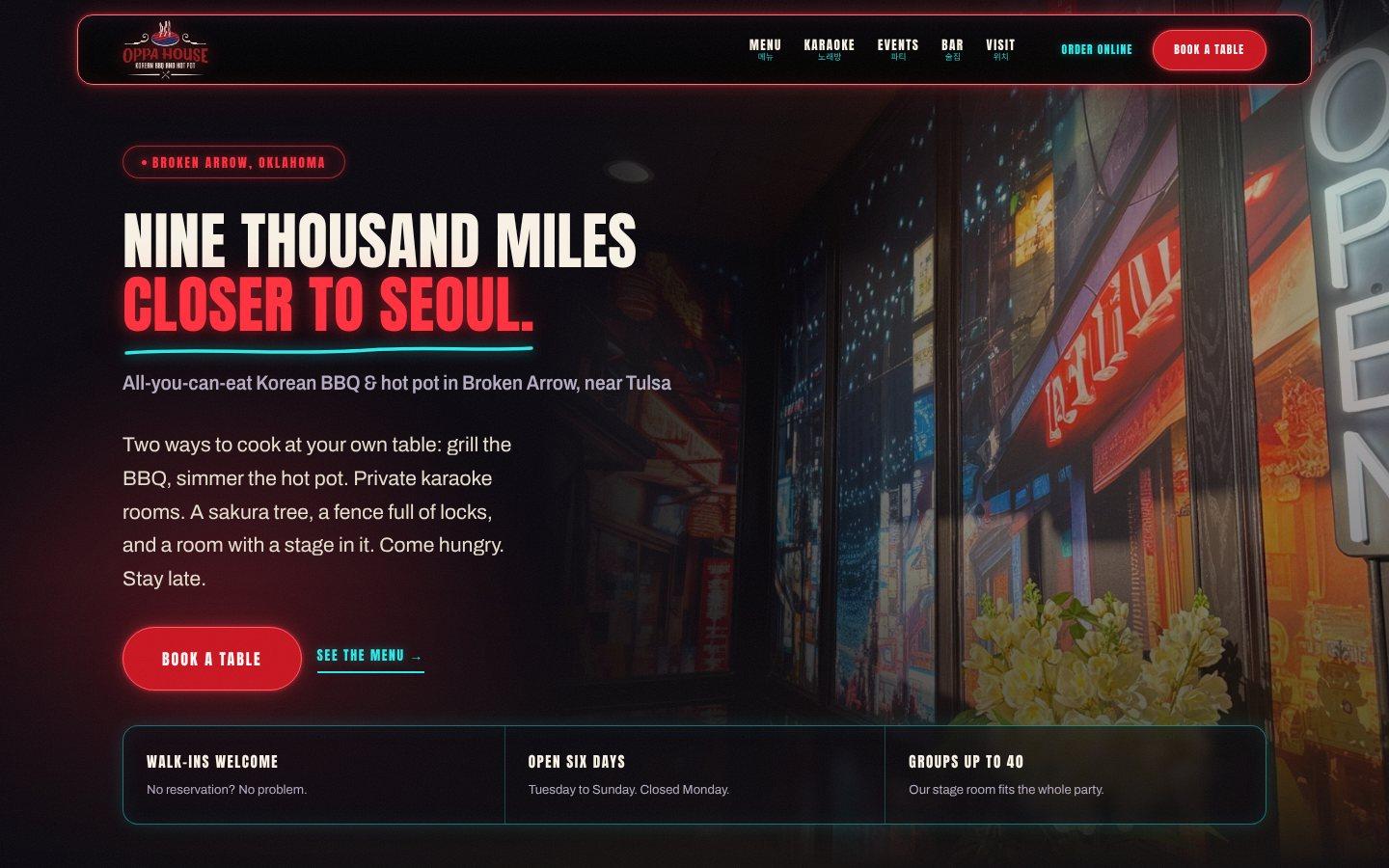
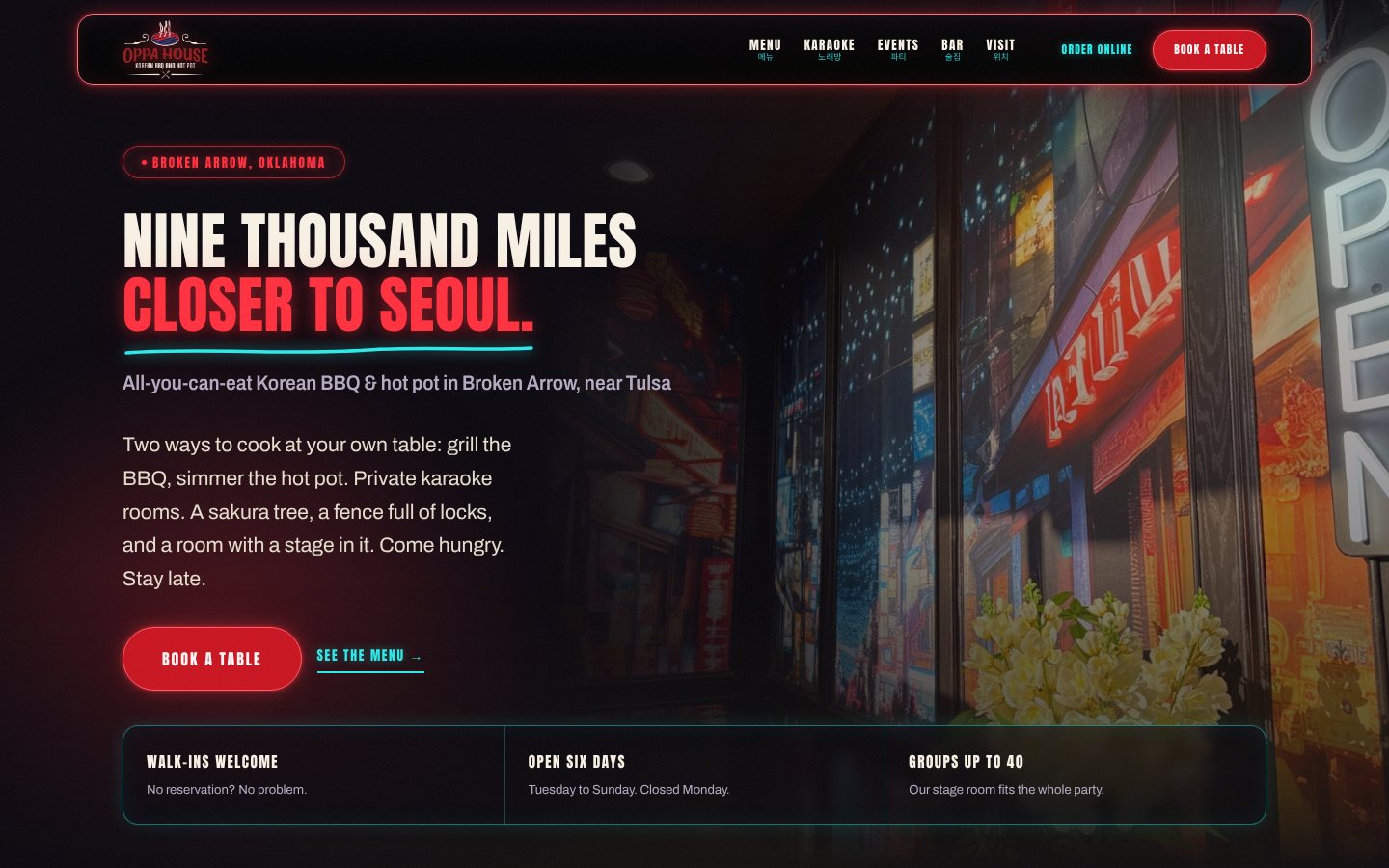
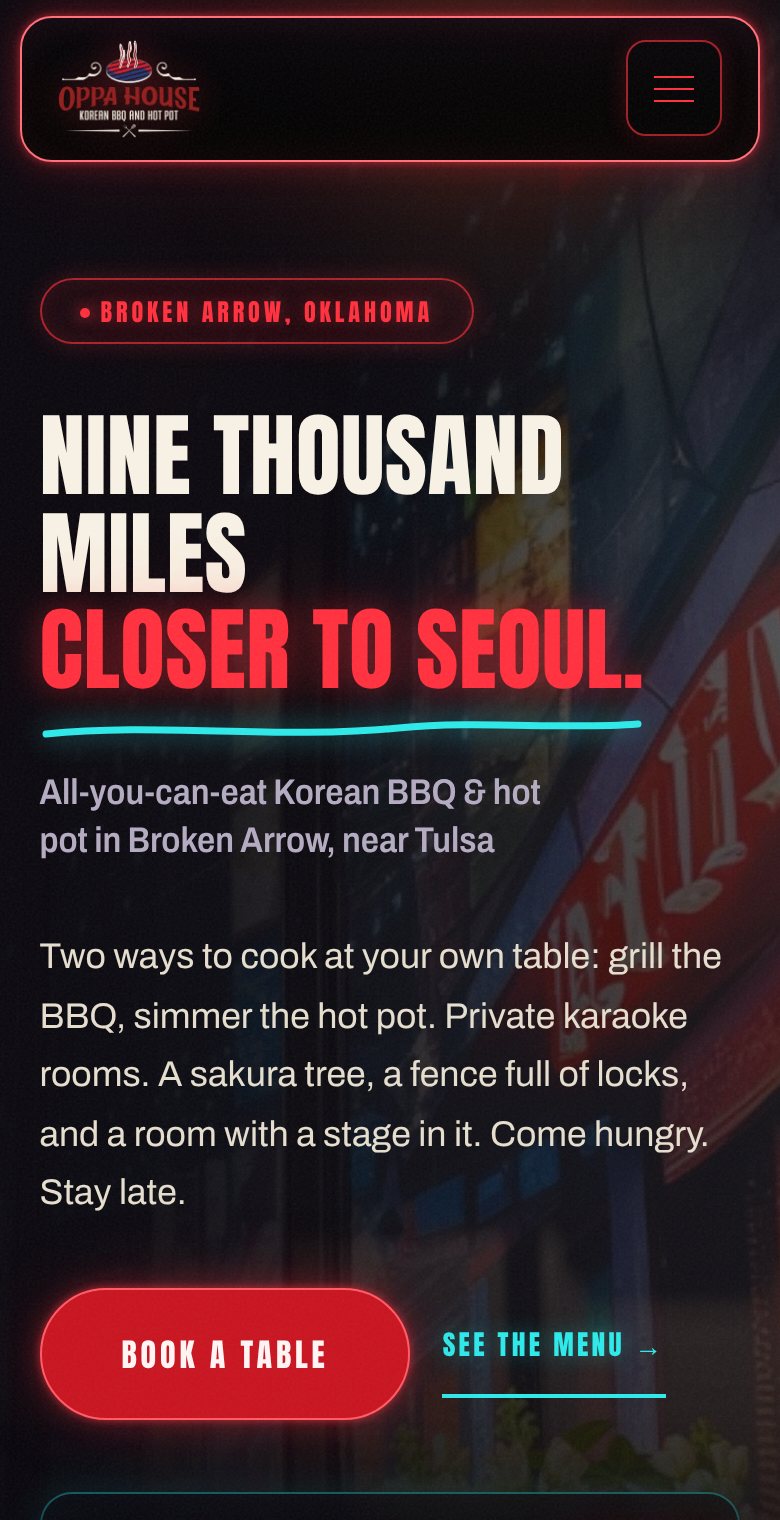
The design is built around one idea: a Korean BBQ street at night. Black asphalt, hand-bent neon, bilingual signage with English stacked over Hangul, and the warm glow of a grill coming up off the table. The headline on the homepage, Nine thousand miles closer to Seoul, sets the tone before a guest has read anything else, and the neon pink, cyan, and grill-gold palette carries it down every page. The look is loud on purpose, but body copy stays plain, high-contrast, and easy to read, and every text and background pairing was checked against accessibility contrast standards.
Each section of the site gets one color “voice” so a guest always knows where they are: pink for the party side of the restaurant, gold wherever heat and food are the subject, and cyan where the page stops performing and starts being useful, like visiting and reserving.
What guests can do
Choose a tier and eat
The menu is real, readable text rather than pictures of a menu: Silver and Gold all-you-can-eat tiers for Korean BBQ and hot pot together, a plain-language explanation of how hot pot works for first-timers, and separate pages for the full menu, the hot pot, and the bar. Staff can update prices and opening hours themselves, so the site never drifts from what the door says.
Pick a karaoke room
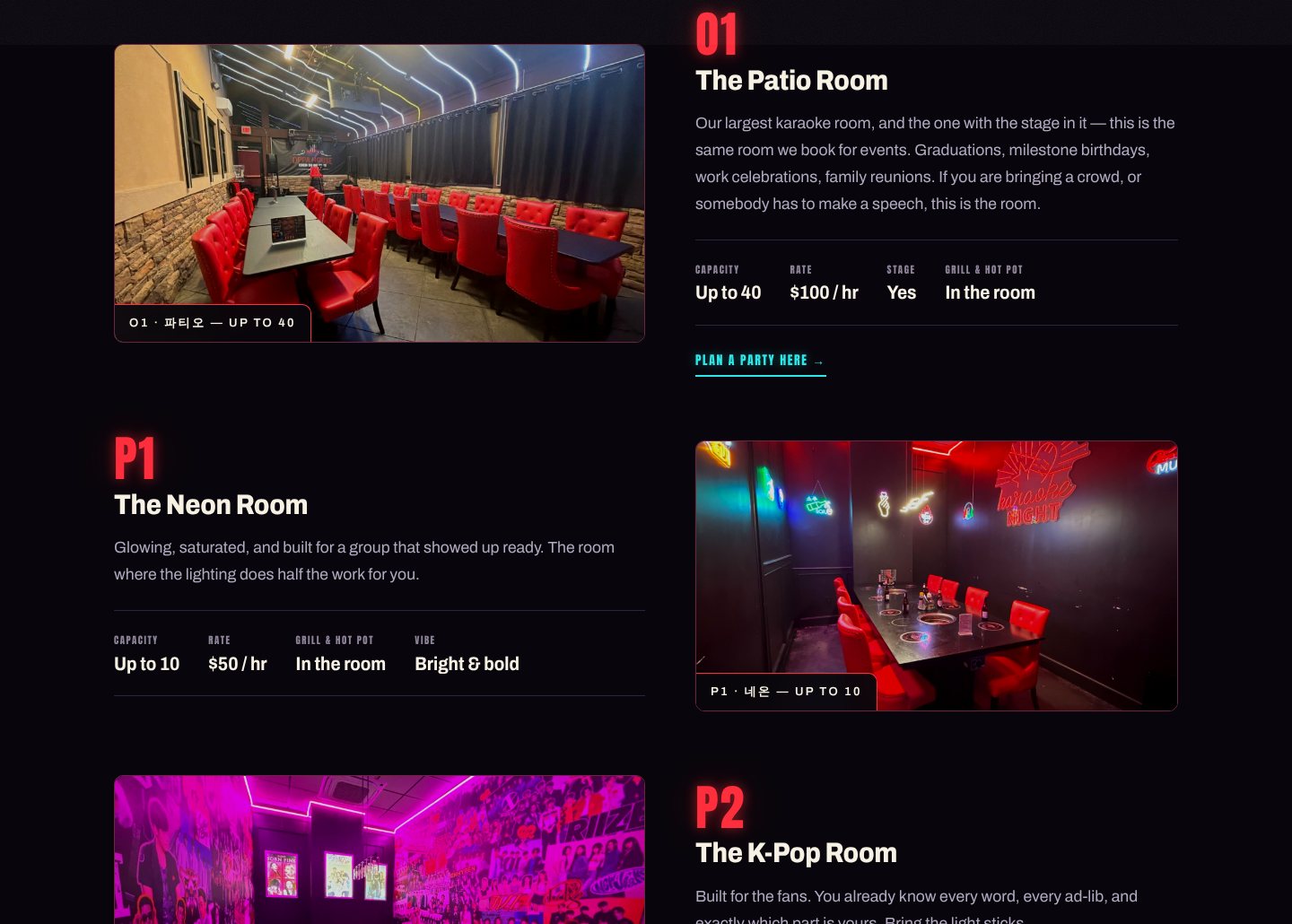
Four private rooms, each with its own mood — the big Patio Room with the stage, the glowing Neon Room, the K-Pop Room, and the quiet Tatami Room — each with a photo, capacity, and hourly rate. Every room has its own grill and hot pot burner, so a group can eat and sing at the same table, and the page answers the questions people actually ask before they call: what it costs, how many fit, whether outside cake is welcome, and whether kids are allowed.
Plan a party on the stage
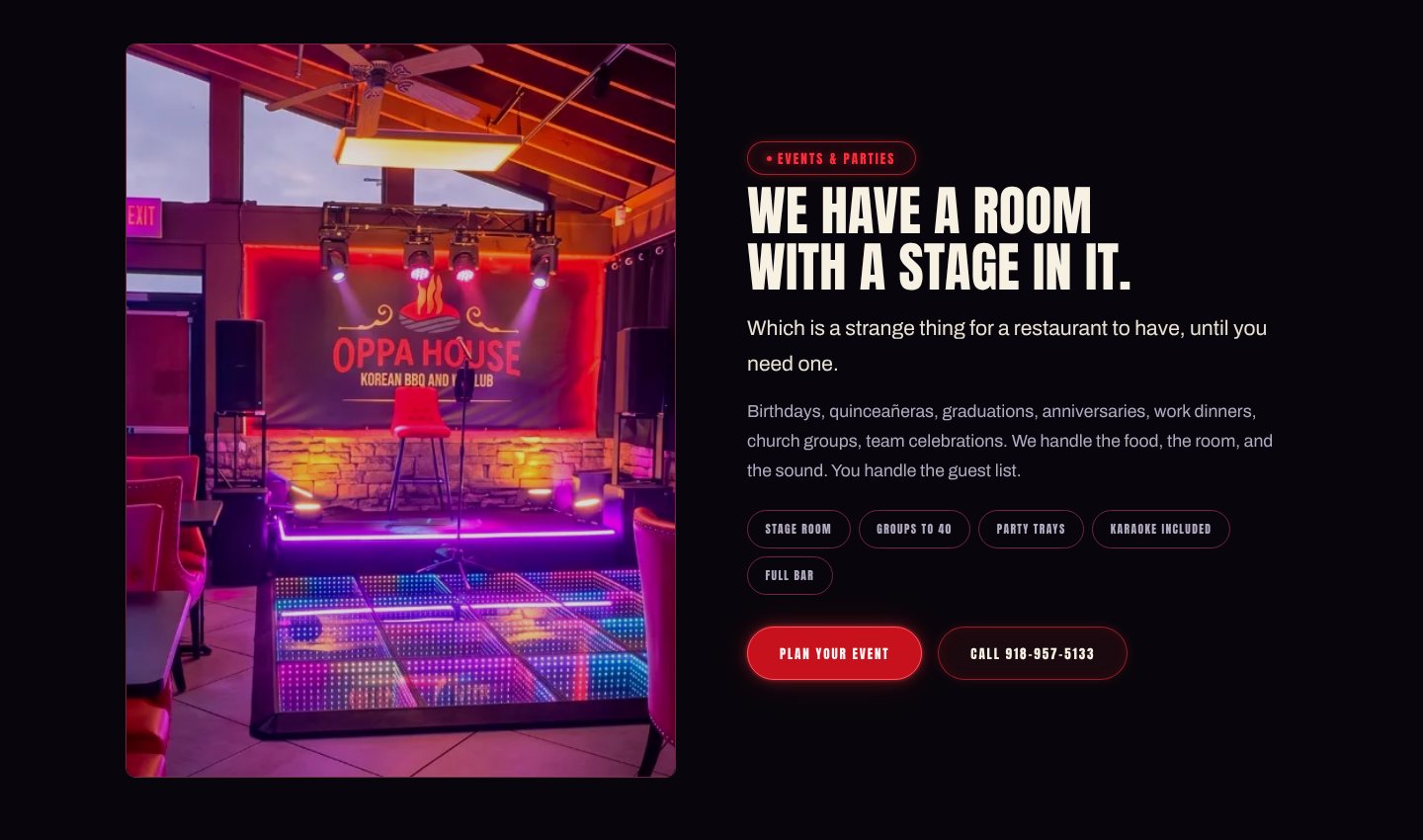
The events page treats the stage room as the product it is: birthdays, quinceañeras, graduations, work dinners, and church groups, with food, room, and sound handled for the host. An enquiry form feeds straight into a shared staff inbox, where the team reads and answers every message.
Hang a lock on the fence
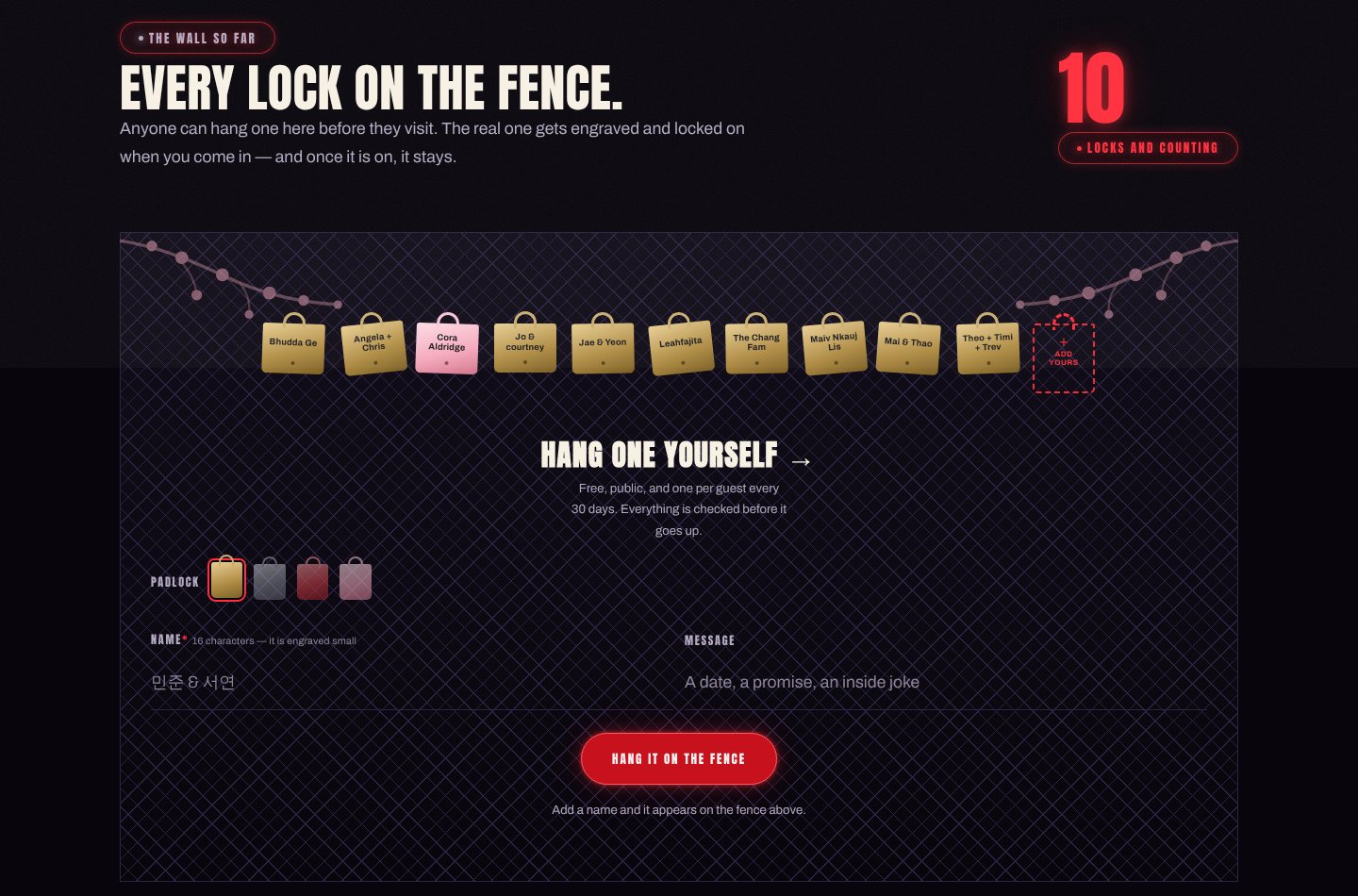
The signature feature of the site is a love-lock wall. Anyone can write a name and a short message, pick a padlock, and hang it on a virtual fence, with the real padlock engraved and locked onto the fence at the restaurant when they visit. Every lock is checked before it goes up, so the wall stays something a family can look at. It gives Oppa House something worth sharing and a reason for guests to come back, and it makes the restaurant's most distinctive feature visible to someone who has never walked in.
Built for the phone in your hand
Most people decide where to eat on their phone, so the mobile site keeps the four things that matter pinned to the bottom of the screen: menu, call, book, and order. Booking goes through OpenTable, online ordering goes through the restaurant's ordering site, and walk-ins are welcomed in plain words on the homepage.
Results
The new site gives Oppa House a presence that matches the room. It replaces a site search engines couldn't read with one where every page, dish, room, and rate is plain text, structured so Google can tell exactly what the restaurant is and where it is, and the old Wix links carry over to their new homes so nothing earned before the move is lost. Guest reviews from Google appear on the homepage as real text, and opening hours stay in step with the Google listing.
The restaurant already has more than 340 written Google reviews, and the site is now set up to measure what happens after someone lands on it: table bookings, phone taps, directions requests, and online orders each register as their own action. That tracking is what lets the Google Ads campaigns Dotarus runs for Oppa House focus on the things that fill tables instead of just sending clicks.
Where to see it
Oppa House is at oppahouse.com, at 7001 S Garnett Rd in Broken Arrow, Oklahoma — Tuesday through Sunday, walk-ins always welcome.